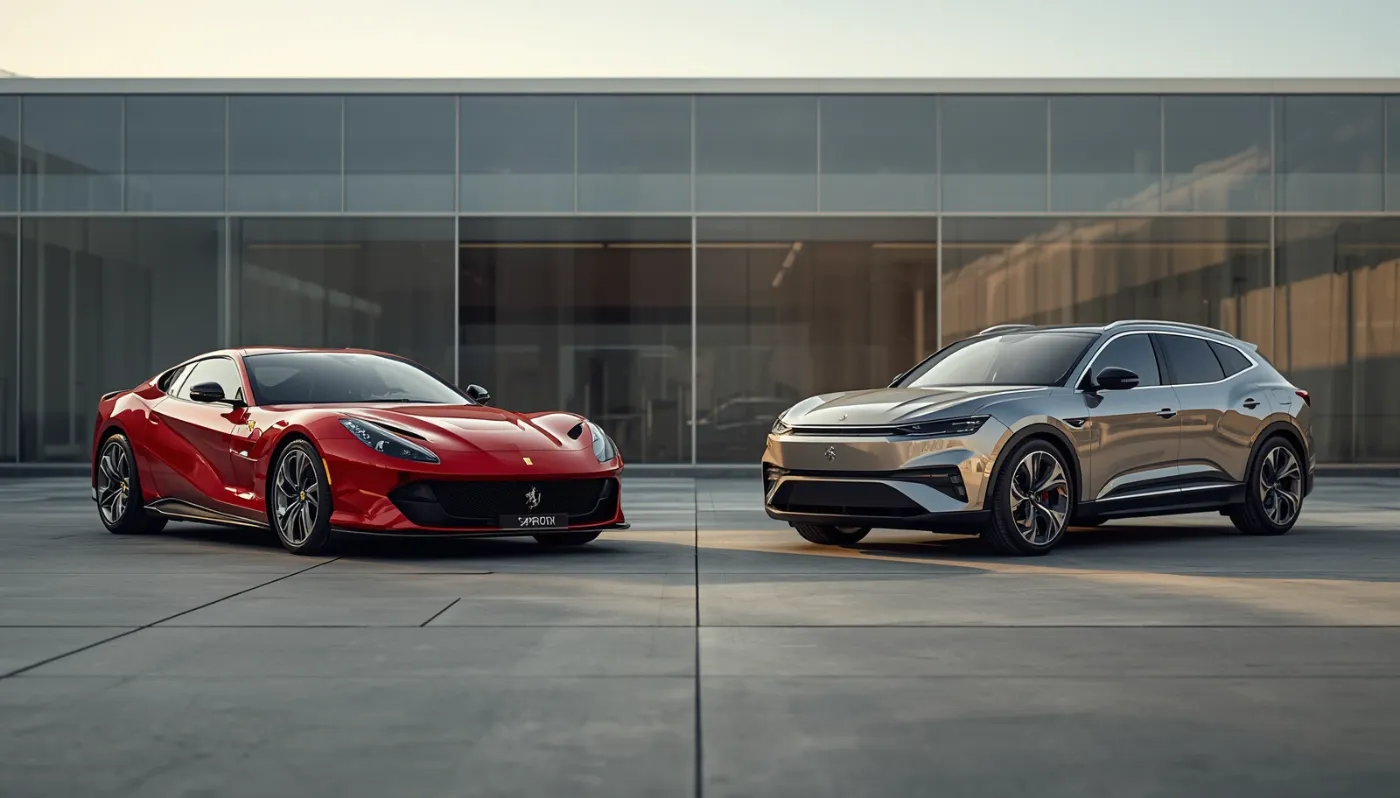
The Residual Value Showdown: Will Chinese Super-EV Cabin Tech Outlast European V12 Heritage Engines?
For Dubai drivers, value is rarely just the sticker price. Whether you are evaluating a Car for Sale , planning a fleet for a Luxury Car Rental business, or deciding which halo car to keep long-term, the real question is what the vehicle will be worth when you exit. At POF Rental, we see this decision play out daily: some clients want the timeless theatre of a European V12, while others prefer the ultra-modern calm of a Chinese super-EV with a cabin that feels like a private lounge.
This article runs a Dubai-first residual value analysis of two competing luxury propositions: (1) European V12 heritage engines that increasingly trade on scarcity, provenance, and emotional utility; and (2) Chinese super-EVs whose differentiation is heavily concentrated in battery systems and software-defined cabin technology. The goal is not to crown a universal winner, but to clarify which attributes are most likely to support EV resale value in the UAE's uniquely liquid, image-driven secondary market.
Residual Value, Defined for the UAE Luxury Ecosystem
Residual value is the expected market value of a car at a future date, usually expressed as a percentage of the original transaction price. In Dubai, residual outcomes are shaped by factors that are sometimes secondary elsewhere: rapid model turnover in the premium segment, a constant inflow of new residents, cross-border demand for desirable GCC-spec vehicles, and a rental market that can either protect value (through professional maintenance) or compress it (through heavy utilization).
For buyers and sellers browsing Used Cars Dubai listings (and yes, the spelling varies across marketplaces), residual value is ultimately a referendum on confidence: confidence in mechanical durability, confidence in serviceability, confidence in parts availability, and confidence that the next buyer will still desire the same badge, drivetrain, and user experience.
The V12 Thesis: Scarcity, Provenance, and Mechanical Legibility
A European V12 is no longer just a powertrain; it is a cultural artifact. As global emissions constraints tighten and manufacturers rationalize cylinder counts, many V12s are becoming end-of-era objects. That matters because residual value in the collectible-luxury tier often behaves less like transportation depreciation and more like market pricing for limited-production goods.
In practical terms, V12 residual resilience tends to be supported by:
- Supply Compression: Fewer naturally aspirated, non-hybrid V12 variants and fewer special-edition allocations increase scarcity premiums.
- Provenance Signals: Original paint, matching numbers (where applicable), documented service history, and factory-correct specifications that future buyers recognize as desirable.
- Mechanical Legibility: Even complex V12s are familiar to enthusiasts. Repairs and rebuilds are expensive, but the process is well understood.
- Emotional Utility: The sound, response, and ceremony remain difficult to substitute with software-driven experiences.
However, the V12 thesis is not frictionless. Total ownership costs remain high, deferred maintenance is punished during resale, and regulatory uncertainty may influence future demand. Strong residuals therefore depend heavily on condition, documentation, and specialist servicing.
The Chinese Super-EV Thesis: Software-Defined Luxury and Cabin-First Differentiation
Chinese super-EVs approach luxury from the inside out. Instead of centering the product around engine displacement, they prioritize user experience through multi-screen cockpit architectures, executive rear seating, advanced HVAC purification, premium audio systems, and AI-powered digital assistants. In the UAE, where heat management, cabin comfort, and effortless daily usability are essential, this approach has immediate consumer appeal.
But the residual-value question is sharper: when so much perceived luxury is delivered by software, does the vehicle age like a desirable automobile—or like premium consumer electronics?
Key residual value supports include:
- Over-the-Air (OTA) Updates: Continuous software improvements can add features, refine energy management, and improve interface responsiveness, reducing perceived obsolescence.
- Feature Density: Vehicles with extensive comfort and driver-assistance technologies remain competitive for longer periods.
- Battery and Thermal Engineering: Strong cooling systems and stable battery performance in hot climates improve long-term buyer confidence.
Counterweights also exist. Brand recognition is still developing outside China, buyer confidence depends on local service infrastructure, and rapid innovation can accelerate depreciation when new battery technologies or next-generation cabin platforms are introduced.
The Battery Factor: The Most Expensive Variable in EV Residuals
If a V12's residual value depends on provenance and maintenance records, an EV's residual value depends on battery confidence. Battery health affects real-world range, charging performance, and replacement risk—each of which influences used market demand.
What Sophisticated Buyers Look For
- State of Health (SoH): Verified diagnostics showing remaining usable battery capacity.
- Charging Pattern: Frequent DC fast charging is not necessarily negative, but heavy reliance may raise concerns when combined with high annual mileage.
- Thermal History: Consistent operation in extreme UAE temperatures without excessive degradation improves buyer confidence.
- Warranty Transferability: A transferable battery warranty with clear coverage significantly strengthens resale potential.
For fleet operators, these factors determine whether a super-EV represents a smart long-term investment. For private buyers, they influence whether the vehicle belongs in a long-term ownership strategy or a shorter ownership cycle.
Dubai's Secondary Market: Where Showroom Drama Meets Spreadsheet Discipline
Dubai is simultaneously an enthusiast city and an efficiency-driven city. The same customer may reserve a V12 for a weekend celebration before requesting a luxury EV SUV for everyday family use. This dual demand makes residual value especially important.
Within the Exotic Car Rental segment, V12-powered vehicles remain the benchmark for special occasions because of their unmistakable sound, prestige, and visual impact. Meanwhile, premium EVs are expanding rapidly within the SUV Rental Dubai and Premium Car Rental Dubai categories by delivering exceptional comfort, advanced technology, and quiet daily usability.
This creates two clear market trends:
- Well-maintained, limited-production V12 models continue to retain value when supported by strong documentation and genuine scarcity.
- Chinese super-EVs may experience steeper early depreciation but can stabilize over time if manufacturers maintain robust OTA support and reliable service infrastructure.
What Cabin Technology Actually Does to Long-Term Value
Cabin technology contributes to resale value only when it remains functional, responsive, and supported. A sophisticated interface quickly loses appeal if software support ends, applications become outdated, or hardware becomes unreliable.
When evaluating a Chinese Car Rental as a "try-before-you-buy" experience, pay close attention to startup speed, connectivity stability, navigation performance, language support, HVAC efficiency in Dubai's climate, and driver-assistance behavior. These everyday characteristics often influence long-term reputation more than headline specifications.
Buyer Playbook: How to Protect Residual Value in Either Camp
If You Are Buying a V12
- Prioritize Documentation: Complete service records, inspection reports, and maintenance history significantly improve resale value.
- Avoid Story Problems: Unclear accident history, incomplete import records, or inconsistent mileage can substantially reduce buyer confidence.
- Choose Timeless Specifications: Classic color combinations and desirable factory options generally outperform novelty configurations.
- Maintain Proactively: Preventive maintenance protects long-term value and reduces resale complications.
If You Are Buying a Super-EV
- Insist on Battery Transparency: Request State of Health reports and verify remaining warranty coverage.
- Evaluate the Support Ecosystem: Consider service availability, parts supply, and software update frequency before purchasing.
- Select Higher-Range Variants: Longer-range models generally maintain stronger resale demand.
- Track Software History: Keep records of OTA updates and module replacements alongside traditional service records.
Renting vs. Buying in Dubai: A Rational Way to Experience Both Worlds
Not every luxury decision requires ownership. Renting provides an efficient way to experience both automotive philosophies before making a long-term financial commitment.
- Rent a V12 when your priority is emotion, celebration, and unforgettable driving experiences.
- Rent a Premium EV SUV when your focus is daily comfort, quiet performance, and advanced cabin technology.
For readers who regularly follow Luxury Car Rental Blogs, this represents one of Dubai's biggest advantages: the local market allows buyers to evaluate ownership experiences through rentals before investing in a specific vehicle.
So, Which Will Outlast the Other?
From a residual-value perspective, European V12 heritage engines and Chinese super-EV cabin technology compete in entirely different categories.
European V12s increasingly behave like collectible luxury assets. Their long-term value depends on rarity, originality, documentation, and continued enthusiast demand.
Chinese super-EVs behave like software-defined platforms. Their residual value depends on battery performance, long-term software support, and the manufacturer's commitment to maintaining the ownership experience. Although early depreciation remains a concern, consistent OTA updates and strong service networks can significantly improve long-term ownership confidence.
For Dubai specifically, V12s continue to dominate the experience-focused Exotic Car Rental segment, while premium EVs steadily expand their influence within daily luxury mobility, shaping how buyers compare a Car for Sale across different categories.
Frequently Asked Questions (FAQ)
Do EVs hold value in Dubai as well as V12 supercars?
It depends on the vehicle segment. Many V12 models benefit from scarcity and brand heritage, which can support stronger long-term values when maintenance and documentation are excellent. EVs often experience faster early depreciation, but strong battery warranties, consistent OTA support, and excellent real-world usability can stabilize EV resale value in the UAE.
What matters most for EV resale value: range, battery health, or cabin tech?
Battery health remains the most important factor because it directly determines usable driving range and long-term buyer confidence. Higher-range variants generally retain value more effectively, while cabin technology contributes only if software support remains active.
How can I verify battery condition before buying a used EV in the UAE?
Request a State of Health (SoH) report, verify remaining battery warranty coverage, test charging performance, and review complete service history. When purchasing from Used Cars Dubai listings, also confirm accident history and any battery-related repairs.
Do over-the-air updates really help residual value?
Yes. Consistent OTA updates reduce functional obsolescence by improving efficiency, adding new features, and enhancing the cabin experience. Vehicles with long-term software support generally remain more attractive on the secondary market.
Is renting a better option than buying for the latest Chinese super-EVs?
For many drivers, yes. Renting allows you to experience the latest technology without assuming the risks associated with rapid model-cycle depreciation. It is also an effective way to compare multiple platforms before purchasing.
Why do V12 models remain popular in Exotic Car Rental in Dubai?
V12-powered vehicles deliver unmatched emotional appeal through sound, performance, and prestige. That emotional experience continues to drive demand within Dubai's Exotic Car Rental market despite increasing EV adoption.
Can I rent both a V12 and a premium EV SUV to compare in real Dubai conditions?
Yes. Renting both vehicle types allows you to evaluate driving dynamics, comfort, heat management, cabin technology, and everyday usability before making a long-term purchase decision.
Experience Both with POF Rental
POF Rental is a luxury car rental company in Dubai. If you want to compare a heritage V12 with a next-generation EV under real UAE driving conditions—including traffic, extreme temperatures, road speeds, and daily routines—renting provides the most practical comparison.
Explore our Premium Car Rental Dubai fleet, experience both automotive philosophies firsthand, and discover which definition of luxury best matches your lifestyle today—and your resale expectations tomorrow.```